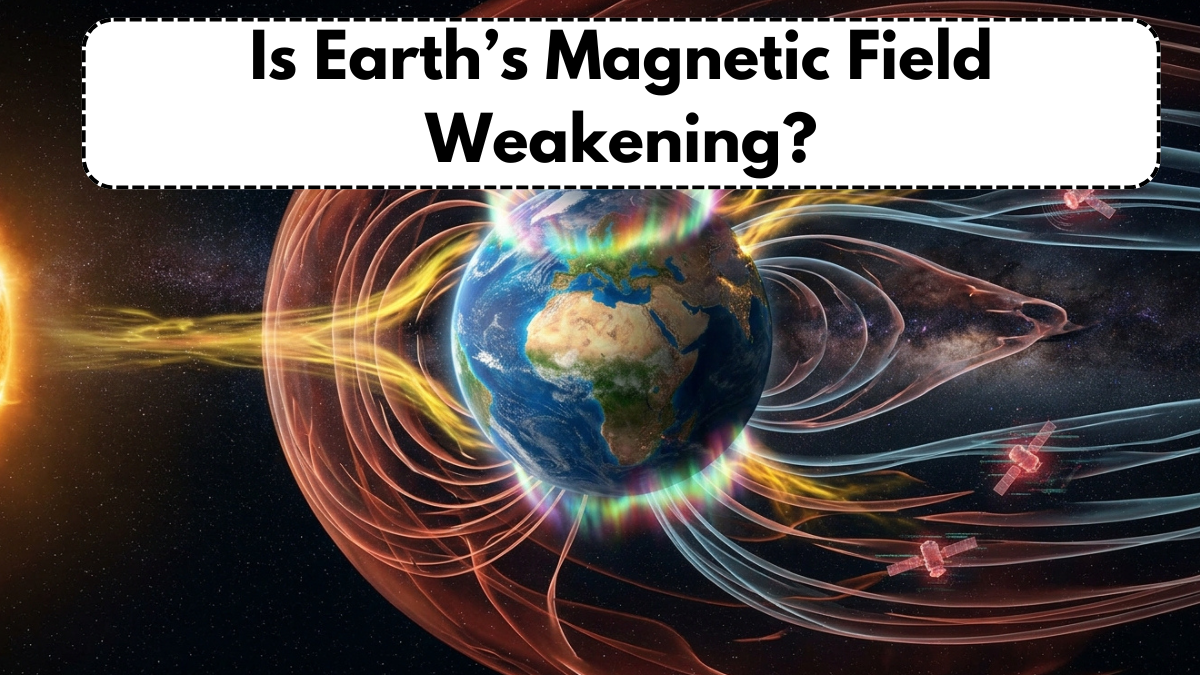
Earth’s magnetic field acts like an invisible shield surrounding the planet, protecting life from harmful solar radiation and charged particles from space. However, scientists have discovered that this protective field has been gradually changing over time. The growing discussion around Earth’s magnetic field weakening has sparked scientific research, public curiosity, and even theories about possible future magnetic pole shifts. Researchers continue monitoring these changes closely because the magnetic field plays a critical role in navigation, satellite systems, and protection against dangerous space weather.
The topic of Earth’s magnetic field weakening is important because Earth’s magnetic shield is not fixed or permanent. Geological records show that the magnetic poles have shifted many times throughout Earth’s history. Scientists studying pole shift theory are trying to understand whether current magnetic changes are part of a natural cycle or a sign of larger future transformations. While the weakening field does not currently threaten life directly, it could affect modern technology and increase vulnerability to solar activity.
What Is Earth’s Magnetic Field?
To understand Earth’s magnetic field weakening, it is important to know how the magnetic field forms. Earth’s magnetic field is generated deep inside the planet by the movement of molten iron and nickel within the outer core.
This process, known as the geodynamo effect, creates electric currents that produce a giant magnetic field extending far into space. Scientists studying space weather explain that this field helps block charged particles from the Sun that could otherwise damage Earth’s atmosphere and living organisms.
Important functions of Earth’s magnetic field include:
- Shielding Earth from solar radiation
- Protecting satellites
- Supporting animal navigation
- Guiding compasses
- Reducing atmospheric particle loss
Without this protective system, space weather effects on Earth would become far more dangerous.
Evidence That Earth’s Magnetic Field Is Weakening
Scientists researching Earth’s magnetic field weakening have observed measurable declines in magnetic field strength over the last two centuries. Some regions, particularly the South Atlantic Anomaly, show especially noticeable weakening.
The South Atlantic Anomaly is an area where Earth’s magnetic field is significantly weaker than average. Satellites passing through this region sometimes experience electronic disruptions due to increased radiation exposure.
Here is a table showing key facts related to magnetic field changes:
| Magnetic Field Feature | Scientific Observation |
|---|---|
| Overall Field Strength | Gradual decline over centuries |
| South Atlantic Anomaly | Region of unusually weak magnetism |
| Magnetic North Pole Movement | Pole shifting faster than before |
| Pole Reversals in History | Occurred multiple times in Earth’s past |
| Solar Radiation Exposure | Increased in weaker magnetic zones |
These findings continue fueling scientific discussions about pole shift theory and long-term magnetic changes.
Why Earth’s Magnetic Field Changes Naturally
One important fact about Earth’s magnetic field weakening is that magnetic changes are normal over geological time. Earth’s core is highly dynamic, meaning magnetic patterns constantly shift as molten metal moves beneath the surface.
Scientists studying pole shift theory explain that Earth’s magnetic poles are not fixed in one location. In fact, the magnetic north pole has been moving across the Arctic region faster in recent decades.
Natural magnetic field changes include:
- Pole drifting
- Temporary weakening
- Magnetic anomalies
- Full pole reversals
- Regional magnetic fluctuations
Researchers involved in space weather studies emphasize that magnetic field movement and variation have happened throughout Earth’s history.
What Is Pole Shift Theory?
The idea of pole shift theory refers to changes in Earth’s magnetic poles over time. Geological evidence shows that Earth’s magnetic poles reversed many times in the past, meaning magnetic north and south switched positions completely.
Scientists studying Earth’s magnetic field weakening examine ancient volcanic rocks and ocean floor records to understand previous magnetic reversals. During these events, magnetic strength weakened before eventually rebuilding in the opposite orientation.
Key facts about magnetic pole reversals include:
- Reversals happen naturally
- They occur over thousands of years
- Earth experienced many past reversals
- No evidence links reversals to mass extinction
- Magnetic fields become more complex during transitions
Modern pole shift theory research focuses on understanding whether current weakening patterns could indicate another future reversal.
How Space Weather Affects Earth
The connection between Earth’s magnetic field weakening and space weather is extremely important for modern technology. Space weather refers to conditions caused by solar activity, including solar flares and charged particle storms.
Earth’s magnetic field normally deflects much of this solar radiation. However, weaker magnetic regions allow more energetic particles to approach Earth.
Potential effects of strong space weather include:
- Satellite damage
- GPS disruption
- Radio communication problems
- Power grid failures
- Increased radiation exposure for astronauts
Scientists monitoring Earth’s magnetic field weakening closely track how solar storms interact with magnetic anomalies such as the South Atlantic Anomaly.
Could a Pole Reversal Harm Humanity?
One major concern surrounding pole shift theory is whether a future magnetic reversal could harm life on Earth. Scientists generally believe a magnetic reversal would not directly cause extinction or catastrophic destruction.
Researchers studying Earth’s magnetic field weakening explain that even during weaker magnetic periods, Earth would still maintain some level of magnetic protection. The atmosphere itself also provides significant shielding against radiation.
However, technological systems could face increased challenges from space weather during periods of reduced magnetic strength.
Possible technological impacts include:
- Satellite malfunctions
- Increased radiation exposure in space
- Navigation system interference
- Aviation communication issues
- Power infrastructure risks
Modern civilization depends heavily on electronics and satellites, making magnetic field monitoring increasingly important.
How Animals Use Earth’s Magnetic Field
Another fascinating aspect of Earth’s magnetic field weakening involves animal navigation. Many species use Earth’s magnetic field to orient themselves during migration and travel.
Scientists studying pole shift theory and biological navigation found that birds, sea turtles, whales, and some insects detect magnetic signals to navigate long distances.
Examples of magnetically sensitive animals include:
- Migratory birds
- Sea turtles
- Salmon
- Sharks
- Bees
Researchers continue exploring how changing magnetic conditions may influence animal migration and ecological behavior.
How Scientists Monitor Magnetic Changes
Modern technology allows scientists to monitor Earth’s magnetic field weakening more accurately than ever before. Satellites, ground observatories, and space missions constantly measure magnetic field behavior across the planet.
Important magnetic monitoring tools include:
- European Space Agency Swarm satellites
- Ground-based magnetic observatories
- Ocean floor magnetic studies
- Geological rock analysis
- Space weather forecasting systems
These technologies help scientists better understand pole shift theory and prepare for future magnetic and solar events.
Why Magnetic Field Research Matters
Research involving Earth’s magnetic field weakening is important because magnetic protection directly affects modern infrastructure and planetary safety. Understanding magnetic changes helps scientists improve space weather prediction systems and protect critical technologies.
The study of space weather also contributes to:
- Satellite safety
- Power grid protection
- Aviation safety
- Space exploration planning
- Climate and atmospheric studies
As technology dependence increases globally, understanding magnetic behavior becomes increasingly essential.
Conclusion
The ongoing discussion about Earth’s magnetic field weakening highlights how dynamic and complex our planet truly is. While scientific evidence confirms that Earth’s magnetic field changes naturally over time, researchers continue studying whether current patterns could eventually lead to a future magnetic reversal.
The study of pole shift theory and space weather remains important for understanding planetary protection, satellite safety, and technological resilience. Although there is no immediate reason for panic, continued monitoring helps scientists prepare for future magnetic and solar challenges.
As research advances, humanity will gain even deeper understanding of the invisible magnetic shield protecting life on Earth from the powerful forces of space.
FAQs
Is Earth’s magnetic field really weakening?
Yes, scientists have measured a gradual weakening of Earth’s magnetic field over the past two centuries.
What is pole shift theory?
Pole shift theory refers to changes or reversals in Earth’s magnetic poles, which have occurred naturally many times in Earth’s history.
What is space weather?
Space weather involves solar activity such as solar flares and charged particles that can affect Earth’s atmosphere and technology.
Could Earth’s magnetic poles reverse again?
Scientists believe future magnetic reversals are possible because Earth experienced many reversals in the past.
Why is Earth’s magnetic field important?
Earth’s magnetic field protects the planet from harmful solar radiation and helps support navigation systems and satellite safety.
Click here to learn more