Education is rapidly evolving toward individualized learning experiences that adapt to each student’s pace, strengths, and needs. Traditional classroom models often struggle to accommodate diverse learning styles and progress levels, leading to gaps in comprehension and engagement. adaptive learning systems are emerging as transformative educational technologies that dynamically adjust content and instruction based on real-time student performance. By leveraging personalized education tech and advanced learning analytics, these systems create customized pathways that optimize understanding and retention. As digital education expands globally, adaptive learning is redefining how knowledge is delivered and mastered.
Unlike static curricula, adaptive learning systems continuously analyze learner interactions, assessments, and behavioral patterns. This data-driven approach allows educational platforms to modify difficulty levels, presentation styles, and pacing automatically. Through personalized education tech, students receive targeted support and challenges aligned with their abilities. Meanwhile, learning analytics provides educators with insights into progress and gaps, enabling timely intervention. This combination of personalization and data intelligence is reshaping educational outcomes across schools, universities, and professional training environments.
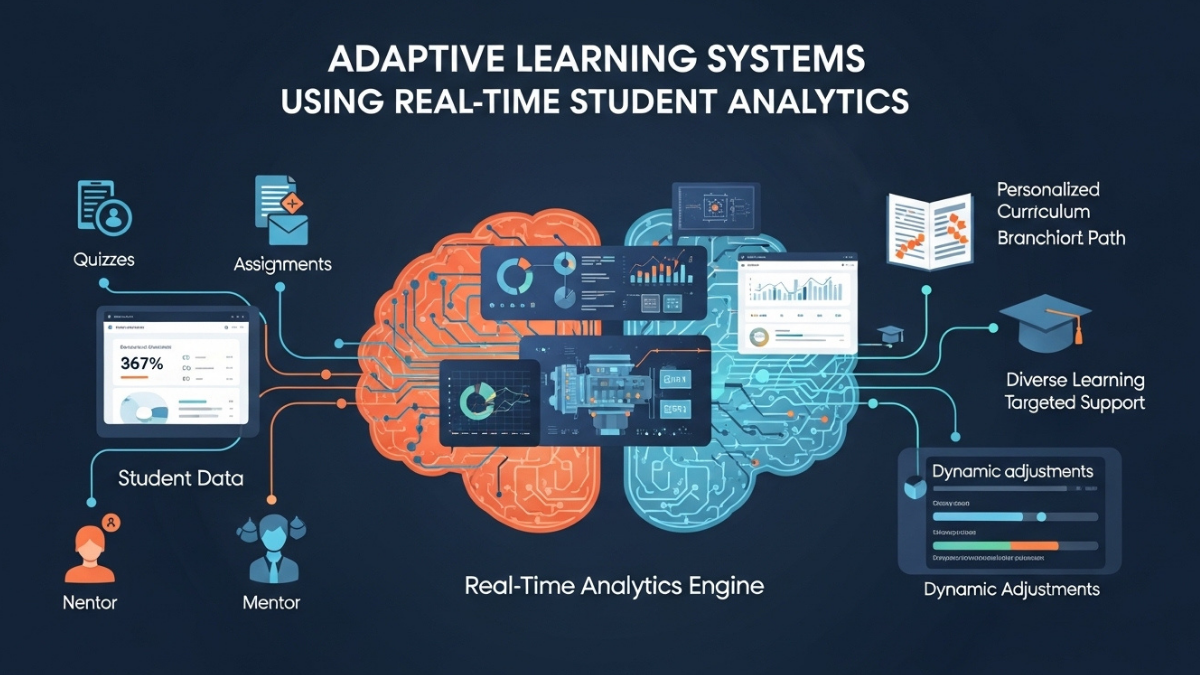
How Adaptive Learning Systems Use Learning Analytics
The core mechanism of adaptive learning systems involves collecting and interpreting data from student interactions with digital content. Every response, attempt, and engagement metric contributes to a learner profile analyzed through learning analytics algorithms. These insights determine which topics a student has mastered and which require reinforcement. Based on this analysis, personalized education tech platforms deliver customized lessons, exercises, and feedback in real time.
This continuous feedback loop allows adaptive learning systems to refine instruction dynamically. Students encountering difficulty receive additional explanations or practice, while advanced learners progress to more complex material. Educators benefit from dashboards generated by learning analytics that highlight class-wide trends and individual needs. Such visibility enhances teaching effectiveness and supports differentiated instruction. Through these capabilities, personalized education tech enables truly individualized learning experiences at scale.
Key adaptive functions include:
- Real-time performance analysis
- Personalized content sequencing
- Targeted remediation and enrichment
- Dynamic difficulty adjustment
- Educator insight dashboards
Benefits of Personalized Education Tech for Students and Educators
One of the most significant advantages of adaptive learning systems is improved student engagement. By aligning content with individual readiness levels, personalized education tech reduces frustration and boredom. Learners experience appropriate challenges and immediate feedback, fostering motivation and confidence. Over time, learning analytics-driven personalization supports deeper comprehension and retention, improving academic outcomes.
Educators also gain substantial benefits. Adaptive learning systems provide detailed insights into student progress, enabling data-informed teaching strategies. Instead of relying solely on periodic assessments, teachers can monitor learning trajectories continuously through learning analytics dashboards. This allows targeted intervention and efficient use of instructional time. By complementing classroom instruction, personalized education tech enhances both teaching effectiveness and student success.
Additional benefits include:
- Individualized pacing and mastery
- Early identification of learning gaps
- Data-driven instructional decisions
- Improved retention and outcomes
- Scalable personalized learning
Technologies Powering Adaptive Learning Systems
The effectiveness of adaptive learning systems depends on advanced artificial intelligence and data processing technologies. Machine learning algorithms interpret student interactions and predict learning needs, forming the foundation of learning analytics. Natural language processing supports adaptive feedback and conversational tutoring within personalized education tech platforms. These capabilities allow systems to understand and respond to diverse learner behaviors.
Cloud computing infrastructure enables large-scale deployment of adaptive learning systems across educational institutions. Continuous data collection and analysis support real-time adaptation and reporting. Integration with learning management systems ensures seamless delivery of personalized education tech experiences. As AI models evolve, learning analytics will become more precise, enabling increasingly sophisticated adaptive instruction tailored to each learner.
| Technology Component | Role in Adaptive Learning | Impact on Personalized Education Tech |
|---|---|---|
| Machine Learning Algorithms | Analyze learner data | Enable dynamic adaptation |
| Learning Analytics Engines | Track progress patterns | Personalize instruction |
| Natural Language Processing | Deliver feedback and tutoring | Enhance engagement |
| Cloud Infrastructure | Scale deployment | Support adaptive learning systems |
| LMS Integration | Deliver content and assessments | Streamline personalized education |
Applications of Adaptive Learning Systems in Education
The adoption of adaptive learning systems spans multiple educational levels and contexts. In K–12 education, personalized education tech platforms support foundational literacy and numeracy by adjusting instruction to each student’s pace. Universities use adaptive courseware to improve outcomes in subjects such as mathematics, science, and language learning. Professional training programs also rely on learning analytics to personalize skill development and certification pathways.
Corporate learning is another major application. Organizations use adaptive learning systems to train employees efficiently in areas such as compliance, technology, and leadership. Adaptive modules ensure mastery before progression, enhancing workforce competence. Online education providers integrate personalized education tech to improve course completion and learner satisfaction. These applications demonstrate how adaptive learning is transforming education across lifelong learning ecosystems.
Common use cases include:
- K–12 personalized instruction
- University course adaptation
- Professional certification training
- Corporate workforce development
- Online education platforms
Challenges and Future Outlook for Adaptive Learning Systems
Despite significant promise, adaptive learning systems face challenges related to data privacy, implementation cost, and pedagogical integration. Collecting detailed student data for learning analytics requires robust security and ethical safeguards. Institutions must also invest in infrastructure and training to deploy personalized education tech effectively. Additionally, aligning adaptive technologies with curriculum standards and teaching practices requires careful design.
However, advances in AI, interoperability standards, and educational research are addressing these challenges. As technology becomes more affordable and scalable, adaptive learning systems will become standard components of digital education. Continuous improvements in learning analytics will enhance accuracy and personalization depth. The future of personalized education tech points toward fully individualized learning journeys supported by intelligent systems. Education may evolve into adaptive ecosystems where every learner receives tailored pathways for mastery.
Conclusion
The rise of adaptive learning systems represents a transformative shift in education toward individualized instruction powered by learning analytics and personalized education tech. By continuously analyzing student performance and adjusting content, these systems enhance engagement, comprehension, and outcomes. Educators gain actionable insights, while learners benefit from tailored learning experiences aligned with their needs. As technology and pedagogy continue to evolve, adaptive learning systems are poised to redefine education across schools, universities, and professional training, enabling more effective and inclusive learning for all.
FAQs
What are adaptive learning systems
adaptive learning systems are educational technologies that use learning analytics and personalized education tech to adjust content and instruction based on student performance.
How does learning analytics support adaptive learning
learning analytics analyzes student data within adaptive learning systems, enabling personalized education tech to tailor lessons and feedback.
Are adaptive learning systems effective
Yes, adaptive learning systems improve engagement and outcomes by providing individualized instruction through personalized education tech and learning analytics.
Where are adaptive learning systems used
Schools, universities, and corporate training programs use adaptive learning systems and personalized education tech supported by learning analytics.
What is the future of adaptive learning systems
The future of adaptive learning systems involves advanced learning analytics and scalable personalized education tech delivering fully individualized education pathways.
Click here to learn more